About This Blog

This is yet another incarnation of my personal blog. Here's where you can read about what I do when I'm not at work: hiking, seeing plays and other shows, eating, traveling, etc.

Popular Posts

Book Review: The Foremost Good Fortune

Posted by gck Sunday, April 22, 2012 1 comments

foremostgoodfortuneThe Foremost Good Fortune by Susan Conley

Genre: Memoir
Rating: *** (out of 5)
Recommended for: light summer reading, people curious about China from a foreigner’s perspective
Received ARC copy through a GoodReads giveaway.

Back-cover summary:
Susan Conley, her husband, and their two young sons say good-bye to their friends, family, and house in Maine for a two-year stint in a high-rise apartment in Beijing, prepared to embrace the inevitable onslaught of new experiences that such a move entails. But Susan can’t predict just how much their lives will change.

While her husband is consumed with his job, Susan works on finishing her novel and confronting the challenges of day-to-day life in an utterly foreign country: determining the proper way to buy apples at a Chinese megamarket; bribing her little boys to ride the school bus; fielding invitations to mysterious “sweater parties” and tracking down the faux-purse empire of the infamous Bag Lady; and getting stuck in an elevator, unable to call for help in Mandarin.

Despite the distractions, there are many occasions for joy.  From road trips to the Great Wall and bartering for a “starter Buddha” at the raucous flea market to lighting fireworks in the streets for the Chinese New Year and feasting on the world’s best dumplings in back-alley restaurants, they gradually turn their unfamiliar environs into a true home.

Then Susan learns she has cancer.  After undergoing treatment in Boston, she returns to Beijing, again as a foreigner—but this time, it’s her own body in which she feels a stranger.  Set against the eternally fascinating backdrop of modern China and full of insight into the trickiest questions of motherhood—How do you talk to children about death?  When is it okay to lie?—this wry and poignant memoir is a celebration of family and a candid exploration of mortality and belonging.

My review:
This book focuses on two major events in Susan Conley’s life: moving to China and dealing with cancer. They’re supposed to mirror one another: first Susan is a stranger in a new country, and then she becomes a stranger to her own body. It sounds cleverly put together with the promise of some sort of deep, inspired conclusion. Unfortunately, it never quite works. The connection never fully materialized for me.

The parts dealing with Conley’s cancer are my least favorite in the book. I think perhaps it is difficult to articulate this experience because it was so internal. Unlike being a foreigner a country, where there are constant anecdotes about culture shocks and language difficulties to illustrate the strangeness to the reader, the cancer is just cancer. So instead, we get stories about how her children react to the cancer. Mildly interesting, but for me, not relatable. I read this book at the same time as I read The Replacement Wife, another book about a woman dealing with cancer. Emotionally, this book fell so flat in comparison.

However, I did enjoy all of Conley’s stories about China, and I would have happily read more. Having returned from a trip to China not long before starting this book, I happily found myself transported back through the writing. Some might find her narration arrogant or irritating, but it didn’t strike me as such. I felt like she wrote honestly and had more tolerance and openness than most Americans would have if they suddenly moved to China. Of course, there are the obligatory complains about smog, toilets, and the language barrier, but this doesn’t prevent her from exploring and enjoying Beijing.

We get additional insight into the culture through characters she describes, such as Mao Ayi (her housekeeper/nanny), Rose (her English teacher), and Lao Wu (her driver). We learn that there are many “Mao Ayi”s in China because people would prove their patriotism with their choice of children’s names. We get a glimpse of the pressures put on young people in China through Rose’s struggle over her boyfriend and career choices.

If the whole book had focused on Conley’s experiences in China (and perhaps more about her husband’s previous adventures in rural areas of the country), it would have been a stronger, more interesting memoir.

Book Review: The Replacement Wife

Posted by gck Tuesday, April 10, 2012 1 comments

replacementwifeThe Replacement Wife by Eileen Goudge

Genre: Chick Lit, Contemporary Fiction
Rating: **** (out of 5)
Recommended for: Fans of Emily Giffin, people who like more serious chick lit
Received ARC e-galley through NetGalley.

Back-cover summary:
Camille Hart, one of Manhattan’s most sought-after matchmakers, has survived more than her fair share of hardships. Her mother died when she was a young girl, leaving her and her sister with an absentee father. Now in her forties, she has already survived cancer once, though the battle revealed just how ill-equipped her husband Edward is to be a single parent. So when doctors tell Camille that her cancer is back—and this time it’s terminal—she decides to put her matchmaking expertise to the test for one final job. Seeking stability for her children and happiness for her husband, Camille sets out to find the perfect woman to replace her when she’s gone.

But what happens when a dying wish becomes a case of “be careful what you wish for”? For Edward and Camille, the stunning conclusion arrives with one last twist of fate that no one saw coming.

My review:
You’ve got a woman with cancer in a loving relationship who decides to find a replacement wife for her gorgeous, successful husband. He’s not into the idea, but once his mind opens to the thought of other women, he starts noticing other women. It’s clear pretty early on that there’s no way that this story is going to have a happy ending for everyone. And as the characters get more and more tangled into their stupid but well-meaning web, the reader can only wait for the inevitable train wreck.

This is a good book. But it’s also a tricky book. From the description and the genre, I expected it to be a mostly light, shallow read with some cheap emotional manipulation. This was not the case. Of course, in the many hundreds of pages, there are many that are easily skimmable, but I felt like it was hard-hitting and realistic in the issues that it explored. The reason why it’s tricky is because, despite being good, it’s a difficult book to like. I would compare this to Emily Giffin’s Heart of the Matter, which I actually stopped reading because I knew that there was no way the book was going to resolve itself in a manner that would make me happy. This book is the same way. I knew right away that it was going to make me mad.

As a reader of chick lit, I find myself expecting things to be a certain way. It doesn’t need to be a happy, tidy ending, but we expect to see people get what they deserve, both good and bad. In The Replacement Wife, it’s more like real life. People just get what they get. No one’s a real villain, and no one’s a real saint. It’s frustrating and sad to watch mostly well-intentioned people causing each other to suffer when it isn’t fair or for any noble purpose. Who do you cheer for, when one person’s happiness means an equally deserving person’s misery?

Viewing the novel as a whole, however, I see a theme. There are a lot of beginnings and endings that occur. Though it’s not satisfying to see good things unfairly come to an end, it’s relieving to see that bad deeds that people do aren’t punished forever, either. It seems like the whole idea is that there is no karma, that things happen randomly in life, and all we can do is hang on and make the most of it.

What can I say? How many chick lit books evoke that strong of a response? I think it speaks loudly for the strength of the author’s character development and writing. This would be an excellent book for a book club because everyone is bound to have something to say.

The premise itself is also really compelling – a matchmaker diagnosed with terminal cancer finding a replacement wife for her husband. Here’s a video of the author, Eileen Goudge, talking about the book:

Book Review: Nothing to Envy

Posted by gck Wednesday, April 4, 2012 2 comments

nothingtoenvyNothing to Envy: Ordinary Lives in North Korea by Barbara Demick

Genre: Non-Fiction, Journalism
Rating: ***** (out of 5)
Recommended for: Anyone who wants to learn more about North Korea

Book 5 of 52 in the “Around the World in 52 Books” Challenge

Back-cover summary:
A remarkable view into North Korea, as seen through the lives of six ordinary citizens.

Nothing to Envy follows the lives of six North Koreans over fifteen years—a chaotic period that saw the death of Kim Il-sung, the unchallenged rise to power of his son Kim Jong-il, and the devastation of a far-ranging famine that killed one-fifth of the population.

Taking us into a landscape most of us have never before seen, award-winning journalist Barbara Demick brings to life what it means to be living under the most repressive totalitarian regime today—an Orwellian world that is by choice not connected to the Internet, in which radio and television dials are welded to the one government station, and where displays of affection are punished; a police state where informants are rewarded and where an offhand remark can send a person to the gulag for life.

Demick takes us deep inside the country, beyond the reach of government censors. Through meticulous and sensitive reporting, we see her six subjects—average North Korean citizens—fall in love, raise families, nurture ambitions, and struggle for survival. One by one, we experience the moments when they realize that their government has betrayed them.

Nothing to Envy is a groundbreaking addition to the literature of totalitarianism and an eye-opening look at a closed world that is of increasing global importance.

My review:
This is the best, most interesting book I have read for awhile. Since reading it, I have found myself looking for more information on North Korea. I have recommended this book to so many people, and so far I’ve only heard good things back. It is well-written, powerful, and relevant. I’m so glad I found out about this book, and I’m thankful for the Around the World Challenge for the motivating me to actually read it.

It wasn’t planned this way, but I’m glad I read this and book and Havana Real (about Cuba) very close together because there are noticeable parallels. Both are Communist dictatorships that have been relatively isolated from the modern world. Both experienced extreme famine and poverty following the collapse of the Soviet Union and the end of the subsidies that allowed their countries to maintain decent economies. Both aren’t really big on their citizens escaping or expressing ideas counter to what is considered acceptable by the government. But North Korea took things to a much bigger extreme. Maybe Cuba is trying to crack down on its bloggers, but North Korea does not have any bloggers. Cubans probably don’t get a whole lot of meat, subsisting on meals like “rice and bouillon cube,” but in North Korea, white rice is considered a luxury item. A North Korean meal is more like… grass and ground up corn cob? Government hired thugs might rough you up for speaking out in Cuba, but in North Korea, they send you and three generations of your family to labor camp for, I dunno, saying Kim Jong-Il is short.

All of the hardships and cruelties are shocking, but if that’s all this book was about, I’d find it relatively average. After all, this is what we expect to hear about when we think of North Korea. The very human stories of the six North Koreans is what makes this book so strong. Of all things, it begins with a love story, a sweet, innocent relationship that could only exist in a place like North Korea, where people don’t keep track of how hours pass and night time really is about darkness because there is no electricity. Most of the characters mentioned are people who wholeheartedly believed, as most North Koreans must believe in order for this system to continue, that they lived in the best country in the world and that their Dear Leader was like a god. However, all of the characters experience a moment – sometimes it didn’t hit until after they had left the country – where they realize that their government has lied to them. One of them described this moment to be like the experience when a religious person becomes an atheist, standing among a sea of believers and realizing that he no longer believes.

One would expect that escape from North Korea, the most isolated country in the world, would be difficult. But as an outsider, one would also expect the decision to be a simple one – why not leave a country without freedom or food? Yet this was not the case. Loyalty to the country is deeply engrained, and many people who have left say that they would immediately return if the Kim dynasty was overthrown. Quite a number of people even crossed the border to China many times, but they did so only to make money, and they would continue to return to North Korea, their home. For the people who did make it out to South Korea, the escape was often bittersweet. They were ill-prepared to adapt to life in a much more modern world. Men who were abnormally short due to malnutrition had little hope of romantic prospects with the taller South Korean women. And most painful of all, since the North Korean idea that bad blood tainted three generations, they had to live with the thought that any relatives left behind might suffer or die in labor camps because of their actions. What a horrible choice to have to make. No wonder such a small number (relatively speaking) of them have left.

In the conclusion, the book mentions that for a long time, people interested in North Korea have looked on with curiosity or even amusement, wondering how this regime has lasted this long and how much longer it has to live. I guess I’m included in that group. It’s hard not to see it with a bit of humor, with so many comical references to Kim Jong-Il and the general silliness that propaganda carries for those who haven’t fallen under its spell. (My mom tells me, though, that they saw similar propaganda growing up in Taiwan and China) But the truth is that as long as the regime remains, North Koreans will continue to die. And North Koreans who have escaped will have to keep wondering about the fate of their loved ones.

Well, this has turned more into general commentary about North Korea than a book review. It definitely says something about the book that it has caused this sort of passionate interest, though. I have found myself reading more about the country and watching some of the rare video footage coming out of the country. Hopefully all of this will be a thing of the past in the near future.

Movie Reviews: Pina, Well-Digger’s Daughter, etc.

Posted by gck Thursday, March 29, 2012 0 comments

pina
Pina
Germany, 2011
Genre: Documentary
Watched: in theater, Cinerama (3D)
Rating: **** (out of 5)

After seeing previews for this film at SIFF many, many times, I finally got to see it at Cinerama, which was a perfect venue for it. I am still not sold on the 3D – it really strains my eyes more than I’d like – but it wasn’t as distracting in this one as in other movies I’ve seen. This was a gorgeous tribute to Pina Bausch and her gorgeous choreography and a beautiful exhibition of dance in general. “Dance, dance, otherwise we are lost,” Pina says. By combining shots of her famous dance works with dance shots filmed around the German city of Wuppertal (including scenes in an elevated tram!), it brings dance from the stage to real life. But really, words aren’t enough to describe it, this is a movie to be seen and not just talked about. The soundtrack is also excellent, and the main song keeps getting stuck in my head.

johncarter
John Carter
USA, 2012
Genre: Fantasy, Action
Watched: in theater, Pacific Science Center (IMAX 3D)
Rating: **1/2 (out of 5)

I don’t think this film is really worth reviewing. I saw it because I had free IMAX tickets, and when I said, “The Lorax,” the guy somehow heard, “John Carter.” It’s a pretty cheesy fantasy action movie that feels really old school content-wise, which makes sense, considering that it’s based on books from the early twentieth century. Special effects are modern, but whatever. He’s a bad boy who’s really good at fighting and ends up on Mars, aka “Barsoom.” She’s a hot, scantily clad princess who also happens to be really awesome at science AND fighting. Guess what happens!!! I give one point for holding my attention for 132 minutes (!!), one point because my brothers and were saying “Jump, Virginia!” for the rest of the weekend, and half a point because I did actually like the ending. I’m sure there will be some people who will enjoy this movie, but it’s not for me.

welldiggersdaughter
The Well-Digger’s Daughter
(also: La Fille Du Puisatier)
France, 2011
Genre: Romantic comedy, drama
Watched: in theater, SIFF
Rating: **** (out of 5)

SIFF does mini-festivals throughout the year, generally in celebration of films from specific countries. I usually miss them completely. I almost missed this one – I didn’t see the announcement for Rendez-Vous with French Cinema until pretty close to the date. I was already going to be in the neighborhood on Sunday for a ballet, and the film right after it looked like something that was both well-reviewed and something I’d enjoy, I went for it. And I wasn’t disappointed! It’s a beautiful remake of an old 1940’s French movie by the same name, and I’m sad because the old version doesn’t seem to be easily available through Netflix and Scarecrow Video only has it on VHS. It’s a sad but ultimately sweet tale of a naïve country girl who quickly falls in love with a son from a rich family and finds out that she is pregnant after he has left to go to war. I think I’m so jaded now from these arthouse films that I was certain things were going to end tragically, and there were a few scene breaks in the second half where I thought things might end abruptly. Maybe it’s time to go back to chick flicks for awhile! Patricia, the well-digger’s daughter, looks beautiful in her suffering. But my favorite character is her father, who struggles when the principles he was raised with clash with the happiness of his daughters. Of course, love ultimately triumphs in the end.

It was also a fun when I realized at the end that it was filmed in places I had visited a few years ago – St-Remy-de-Provence, Les Baux, Paradou. I recognized the Alpilles during the movie, and the beauty of the region definitely shone. My French-speaking friend loved the way they spoke French, but I don’t understand well enough to recognize an accent.

Book Review: The Whipping Club

Posted by gck Wednesday, March 28, 2012 0 comments

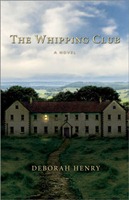
whippingclubThe Whipping Club by Deborah Henry 

Genre: Historical fiction
Rating: *** (out of 5)
Recommended for: People who enjoy darker historical fiction, people who want to explore a lesser known side of Ireland
Received ARC e-galley through NetGalley.

Book 4 of 52 in the “Around the World in 52 Books” Challenge

Back-cover summary:
Marian McKeever and Ben Ellis are not typical young lovers in 1957 Dublin, Ireland; she’s Catholic and teaches at Zion School, and he’s Jewish and a budding journalist. The two plan to wed, but their families object to an interfaith marriage. And when Marian becomes pregnant, she doesn’t tell Ben. Coerced by Father Brennan (a Catholic priest who is also her uncle), Marian goes to Castleboro Mother Baby Home, an institution ruled by Sister Paulinas and Sister Agnes where “sins are purged” via abuse; i.e., pregnant girls are forced to mow the lawn by pulling grass on their hands and knees. Marian is told that her son, Adrian, will be adopted by an American family.

The riveting storyline provides many surprises as it fast-forwards to 1967 where Marian and Ben are married and have a 10-year-old daughter. Marian’s painful secret emerges when she learns that her son was dumped in an abusive orphanage not far from her middle-class home and Sister Agnes is his legal guardian. Thus begins a labyrinthine journey through red tape as the couple fight to regain their firstborn child. Ultimately, 12-year-old Adrian is placed in the Surtane Industrial School for Boys, which is rife with brutality and sexual abuse at the hands of “Christian Brother Ryder.” Though unchecked church power abounds, this is not a religious stereotype or an indictment of faith. Hateful characters like Brother Ryder are balanced with compassionate ones, such as a timid nurse from the Mother Baby Home. Father Brennan deepens into a three-dimensional character who struggles to do what is right.

Henry weaves multilayered themes of prejudice, corruption and redemption with an authentic voice and swift, seamless dialogue. Her prose is engaging, and light poetic touches add immediacy. Echoing the painful lessons of the Jewish Holocaust, Henry’s tale reveals what happens when good people remain silent.

My review:
I didn’t choose this book to represent Ireland when I made my list for the Around the World Challenge, but once I started reading it, I decided that it was a good fit. As promised in the description, The Whipping Club showed an unstereotypical but authentic side of Ireland, opening my eyes to the horrors of industrial schools where orphans and abandoned children were sent and severely mistreated. There was also some exploration of the treatment and perceptions of Jewish people in a highly Catholic society.

An interfaith marriage, a couple trying to regain a lost child, moral ambiguities in the Catholic Church… the description had me very excited to read the book. While it delivered most of what I expected, I felt a lack of emotional connection with the characters and plot until the very end when there was more focus on Adrian’s struggles. Much of the narration came from Marian’s perspective, and I wished I could have cared more about her as a character because it would have made the whole book more powerful.

The story shows the effects of how government paired with corrupt religion can do great harm under the guise of righteousness. It is frustrating to see Ben and Marian unable to bring their biological son back to their loving home while he suffers greater and greater misfortunes in the hands of religious-run state agencies. Though it seems like the industrial school should have been a major part of the story, it doesn’t come into play until late in book, which is unfortunate because I found that to be the most interesting part.

Book Review: Havana Real

Posted by gck Sunday, March 18, 2012 1 comments

havanarealHavana Real by Yoani Sánchez

Genre: Non-fiction, memoir
Rating: ***1/2 (out of 5)
Recommended for: People who enjoy blog posts, people interested in Cuba

Book 3 of 52 in the “Around the World in 52 Books” challenge.

Back-cover summary:
She's been kidnapped and beaten, lives under surveillance, and can only get online—in disguise—at tourist hotspots. She's a blogger, she's a Cuban, and she's a worldwide sensation.

Yoani Sánchez is an unusual dissident: no street protests, no attacks on big politicos, no calls for revolution. Rather, she produces a simple diary about what it means to live under the Castro regime: the chronic hunger and the difficulty of shopping; the art of repairing ancient appliances; and the struggles of living under a propaganda machine that pushes deep into public and private life.

For these simple acts of truth-telling her life is one of constant threat. But she continues on, refusing to be silenced—a living response to all who have ceased to believe in a future for Cuba.

My review:
I spent February literally traveling around the world (to China) and as a result did not read any of the books I intended to read for the challenge that month. This one was actually left over from January, and it took me so long to get through it that I’m now way behind for March’s reading as well. Ah well.

I like reading blogs. I have a decent list of them on my RSS reader that I follow somewhat regularly. However, after reading this book, I think blogs are meant to be read as blogs, not compiled into books. The thing is, blogs are generally written to be current, so it’s a good narrative if you’re following the updates as they come. Or maybe an article comes up through an internet search, and it’s interesting as a single snapshot. But as a complete body of work, it’s not as satisfying of a reading experience as a normal book that was written to be consumed as a whole. Also, in Generation Y, Sanchez’s blog that supplied all the articles for the book, there are pictures and reader comments, which add a lot to the posts that the book doesn’t contain.

But the fact is this: I wouldn’t have known about this blog if I hadn’t found out about this book. And even if I’d discovered it, I certainly would not have read back very far. The book was the way I had to get this content. Even if the reading experience wasn’t wholly satisfactory, the content was.

cuba

Coincidentally, I had watched Anthony Bourdain’s “No Reservations” episode about Cuba not long before starting this book. Though Bourdain did touch on the poverty in Cuba, he made the country look like a pretty good place. Havana was shown as a city of fifty years ago, perfectly preserved and maintained, with its vintage cars and charming architecture. Communism had made things pretty great over there, providing free education that included college. Cubans were so educated, the episode stated, that the country was producing so many doctors that they were sending them out to other countries who were desperate for them. And of course, he showed all of the good Cuban food, dining in one of the paladars, small, private restaurants that the government had begun allowing.

I was scratching my head at the end of the episode. Sounds good, sure. But if it’s not really that bad there, why did so many Cubans leave? Why were people so desperate to get out that they were willing to risk their lives in a shoddy boat for the possibility of getting to America? I’m thinking it wasn’t because they wanted to work at a better hospital.

Yoani Sanchez tells it like it really is. In fact, she tweeted in response to his episode: “What is typical Cuban food for you, Anthony Bourdain? Do you really believe that it’s rice and beans, pork, and plantains? Typical Cuban food isn’t typical or Cuban, it’s what turns up with what we can afford. In short, not much.” (translated) In one of her blog posts, she goes into more detail. “When some confused tourist asks me what a typical Cuban dish is, I answer that I don’t remember, but I know the most common everyday recipes. And I list them: ‘Rice with a beef bouillon cube,’ ‘rice with a hot dog,’ ‘rice with a bacon bouillon cube,’ or the delicacy of ‘rice with a chicken-and-tomato bouillon cube.’” (Here’s another blogger’s response to Bourdain’s portrayal of Cuba)

She tells of the Special Period, a time after all the support from the Soviet Union vanished and Cubans struggled not to starve to death. There’s an anecdote that food shortages were so bad that vendors were selling pizza with melted condoms posing as cheese. She tells of how food items are unpredictably available and that most people cannot survive without the black market, but items there might cost a majority of a month’s wages. Furthermore, many things are available only for “convertible pesos,” the Cuban currency for foreigners. It seems like many Cubans can survive only because of money coming in from friends and relatives on the outside.

Bourdain probably enjoyed running water and electricity. But in Cuba, everything is broken, including the pipes. Sanchez writes that Cubans do not take showers. They wash themselves with buckets of water, and items like soap and shampoo are expensive and often not available. The education system? Sure, it’s free, but the university spots weren’t for everyone. And apparently the solution to the shortage of teachers was to make the worst students into teachers, who would proceed to miseducate the students and confess things like, “Study hard so you won’t end up like me. I had to become a teacher because of my bad grades.”

On the other hand, the Communist state of Cuba was more lenient than I expected, too. Perhaps because my mind is conditioned by the sensationalizing from media, but I was surprised that the government did so little to silence Sanchez, even though her blog openly displayed her name and photo. But maybe they don’t have to. Despite the growing number of Cuban bloggers, so many Americans still picture Cuba as Anthony Bourdain showed it. Baseball, pork, and vintage cars.

The content in this book is significant. There are so many more details that I couldn’t cover in a review, and I think it’s important that people read these words that people have struggled so hard to put up on the Internet.

Brussels Sprouts Are Tasty!

Posted by gck Sunday, March 4, 2012 0 comments

I was forced to eat many gross-tasting “healthy things” as a child, but Brussels sprouts apparently isn’t in the Chinese diet, so I don’t remember ever eating them until I was much older. So I don’t have all the “blech” reaction that some people seem to have when I think of them. It’s hard to say, maybe I wouldn’t have hated them as a kid, since I didn’t hate eggplant or broccoli, and really, what’s to hate? They’re sweet little gems in the sad, bitter world of winter vegetables.

IMG_2887

After eating out for two weeks in China and eating out most of the days since I’ve been back, I felt like it was time to start cooking today. I cooked for a few hours, hopefully making enough to get me through most of the week. After having a great Brussels sprouts and turnip dish at Tavern Law, I knew I wanted to make some. It was convenient to toss them into the pot when I was making 40 Cloves and a Chicken, but this time I felt like something not as garlic-centric. I asked the internet, and it turned up this recipe that spoke to me. It’s probably the title that did it; who can say no to “Oven-Caramelized Brussels Sprouts with Autumn Fruits”? I modified it a little to remove the pears (I wanted less fruit in proportion to the sprouts), remove the onion (it’s on my list to avoid), and use dried herbs (that’s what I had on hand). Martha Stewart also has a version of this that replaces a lot of the seasoning with red wine vinegar. I don’t think I’d do that, but I do like the instructions to cook the bacon separately.

Verdict: the recipe is a winner! The sweetness of the apple really works with the Brussels sprouts. Next time, I’d probably try cooking the bacon separately before adding it to the mix and halving the recipe so it could fit in one pan. I don’t need that much just for one person… or do I? I have a feeling these aren’t going to last too long in the fridge.

Oven-Caramelized Brussels Sprouts with Autumn Fruits, Modified (Original)

Ingredients
2 lbs Brussels sprouts
2 medium apples (I used either Gala or Pink Lady, I forget)
3 slices bacon, cut into 1 inch pieces
2 tsp dried thyme
1 Tbsp dried sage
5 gloves garlic, coarsely chopped
1/3 cup extra virgin olive oil
1/8 tsp hot red pepper flakes
1 Tbsp brown sugar
Salt and fresh ground black pepper to taste

Instructions
1. Preheat oven to 450F.
2. Put 1-2 pans in the oven to warm up. You need enough surface area to form a single layer with all ingredients. I used 2.
3. In a big bowl, combine all ingredients. Season well with salt and pepper.
4. Pull out pan(s) and put ingredients in them, forming a single layer.
5. Bake until everything is browned and sprouts are tender, about 30-40 minutes, turning ingredients every 10 minutes.

Labels

Followers