About This Blog

This is yet another incarnation of my personal blog. Here's where you can read about what I do when I'm not at work: hiking, seeing plays and other shows, eating, traveling, etc.

Popular Posts

Showing posts with label world2012. Show all posts

Book Review: The Language of Baklava

Posted by gck Sunday, July 7, 2013 0 comments

languageofbaklavaThe Language of Baklava by Diana Abu-Jaber

Genre: Memoir, Non-Fiction
Rating: **** (out of 5)
Recommended for: foodies

Book 15 of 52 in the “Around the World” Challenge

Back-cover summary:
Diana Abu-Jaber weaves the story of her life in upstate New York and in Jordan around vividly remembered meals: everything from Lake Ontario shish kabob cookouts with her Arab-American cousins to goat stew feasts under a Bedouin tent in the desert. These sensuously evoked meals in turn illuminate the two cultures of Diana’s childhood–American and Jordanian–and the richness and difficulty of straddling both. They also bring her wonderfully eccentric family to life, most memorably her imperious American grandmother and her impractical, hotheaded, displaced immigrant father, who, like many an immigrant before him, cooked to remember the place he came from and to pass that connection on to his children.

My review:
It took me a really long time to finish reading this… so long (almost 6 months) that I thought I might never finish. Even though I really liked what I was reading, I ended up getting hit by the same force that often makes me not finish other non-fiction books – without the hook of a continuous narrative, I drift away and it takes awhile to come back. There is exactly one e-book copy of this book available in the entire Puget Sound area and a few people on the waiting list each time, so I’d read for three weeks, wait a month and a half, then get back to it again.

But it’s worth it. Maybe another reason I couldn’t read continuously was that the writing made me so hungry that I’d put the book down and get something to eat! Not only are the chapters full of mouthwatering descriptions of food, there are also actual recipes of food that are related to the stories, for example: Bud’s Special Rice for Special Company, Barbaric Lamb Kofta, and Garlic-Stuffed Roasted Luxurious Leg of Lamb. This book is a food lover’s dream.

While food is surely the star here, the characters fight for attention, too. The reader really gets the feel of how it is to be a part of the author’s family. Bud (the father) is unforgettable with his boisterous manner. As a child of immigrant parents myself, I could relate to many of the experiences that the author described (though I think she got to eat yummier food!).

Book Review: The Dervish

Posted by gck Friday, July 5, 2013 0 comments

dervishThe Dervish by Frances Kazan

Genre: Historical Fiction
Rating: *** (out of 5)
Recommended for: people interested in learning more about Turkey and historical events
Received ARC copy through NetGalley.

Book 14 of 52 in the “Around the World” Challenge

Back-cover summary:
The first Arab Spring: revolution and passion seethe and erupt in this action-packed romance during the dying days of the Ottoman Empire. Kazan's novel takes us intimately behind the veil, to see and experience the Ottoman world, to let us view, from the "other" side, how the cultural and political antagonisms between the Occident and the Orient of the past century look. There are no easy villains or heroes in this story. Only ardent, unforgettable characters. An American war widow seeks emotional asylum with her sister at the American Consulate in Constantinople during the Allied occupation in 1919. Through a cross-stitched pattern of synchronicity Kazan's heroine becomes a vital thread in the fate of Mustafa Kemal (later Ataturk) and his battle for his country's freedom. Based on firsthand accounts of the Turkish nationalist resistance, The Dervish details the extraordinary events that culminated in 1923 with the creation of the Republic of Turkey.

My review:
The Dervish tells of events leading up to the creation of the Republic of Turkey through the eyes of a Western artist named Mary Di Benedetti. There are a lot of historical details mentioned in the book. Having recently taken an online course on world history, it was interesting to me to see names I recognized from my class appear as characters in this novel. The descriptions of various places in the Ottoman Empire made the setting come alive for me.

Despite this (or perhaps in a way because of it), I didn’t fully connect to the characters and plot. There’s a lot of action and suspense, as Mary is intimately involved in pivotal events and constantly in danger. Some of it had me eager to find out what happened next, but sometimes the pace lagged and I got lost in the details. Mary has love and grief to deal with. I felt like the grief was handled well, but the love could have been left out and the story might have been stronger.

Book Review: The Third Son

Posted by gck Wednesday, April 24, 2013 0 comments

thirdsonThe Third Son by Julie Wu

Genre: Historical Fiction
Rating: ***1/2 (out of 5)
Recommended for: fans of Lisa See
Received ARC copy through NetGalley.

Book 13 of 52 in the “Around the World” Challenge

Back-cover summary:
It’s 1943. As air-raid sirens blare in Japanese-occupied Taiwan, eight-year-old Saburo walks through the peach forests of Taoyuan. The least favored son of a Taiwanese politician, Saburo is in no hurry to get home to the taunting and abuse he suffers at the hands of his parents and older brother. In the forest he meets Yoshiko, whose descriptions of her loving family are to Saburo like a glimpse of paradise. Meeting her is a moment he will remember forever, and for years he will try to find her again. When he finally does, she is by the side of his oldest brother and greatest rival. Set in a tumultuous and violent period of Taiwanese history—as the Chinese Nationalist Army lays claim to the island and one autocracy replaces another—The Third Son tells the story of lives governed by the inheritance of family and the legacy of culture, and of a young man determined to free himself from both.

My review:
It seems common in Chinese historical fiction for a female main character to go through a great amount of suffering. I suppose it was a “nice” change in this piece of Taiwanese historical fiction for a man to have the suffering instead. And he certainly had to face a lot of difficult challenges in this novel!

I really enjoyed the setting of this novel, much of it taking place in a Taiwan that many people in American don’t know about. I showed a friend the description of the book, and she remarked, “Saburo doesn’t sound like a very Chinese name to me.” The Japanese occupation of Taiwan isn’t often studied in schools here, but it’s important because the influences remain very strong in the country to this day. I enjoyed reading about the Taiwan of the Japanese, followed by what happened when the Chinese Nationalists took over.

Another bright spot in The Third Son is the main character of Saburo. He is an untraditional scholar, a hands-on self-learner instead of a proper student. He is rebellious and speaks his mind, and he is forced to aim for success in unconventional ways. It brought a smile to my face each time his true intelligence managed to win over politics or trickery. His character is one that is very different from the Asian male stereotype.

Though I was constantly rooting for Saburo to succeed, I didn’t feel a strong emotional connection, especially in relation to the love story between him and Yoshiko. This was the main thing that kept the book from being one that I absolutely loved. However, I still enjoyed it a lot, and I look forward to reading more from this author.

Book Review: The Shoemaker’s Wife

Posted by gck Monday, April 22, 2013 0 comments

shoemakerswifeThe Shoemaker’s Wife by Adriana Trigiani

Genre: Historical Fiction
Rating: ***1/2 (out of 5)
Recommended for: Epic historical fiction fans

Book 12 of 52 in the “Around the World” Challenge

Back-cover summary:
The majestic and haunting beauty of the Italian Alps is the setting of the first meeting of Enza, a practical beauty, and Ciro, a strapping mountain boy, who meet as teenagers, despite growing up in villages just a few miles apart. At the turn of the last century, when Ciro catches the local priest in a scandal, he is banished from his village and sent to hide in America as an apprentice to a shoemaker in Little Italy. Without explanation, he leaves a bereft Enza behind. Soon, Enza's family faces disaster and she, too, is forced to go to America with her father to secure their future.

Unbeknownst to one another, they both build fledgling lives in America, Ciro masters shoemaking and Enza takes a factory job in Hoboken until fate intervenes and reunites them. But it is too late: Ciro has volunteered to serve in World War I and Enza, determined to forge a life without him, begins her impressive career as a seamstress at the Metropolitan Opera House that will sweep her into the glamorous salons of Manhattan and into the life of the international singing sensation, Enrico Caruso.

From the stately mansions of Carnegie Hill, to the cobblestone streets of Little Italy, over the perilous cliffs of northern Italy, to the white-capped lakes of northern Minnesota, these star-crossed lovers meet and separate, until, finally, the power of their love changes both of their lives forever.

My review:
I was craving an epic story when I picked up The Shoemaker’s Wife for book club, and I didn’t even realize it until the end. I loved the stories of Ciro, Enza, and their families and friends, weaving in and out of each other’s lives. I loved how the saga moved from location to location, sweeping me into a different world each time.

My favorite parts of the book were the parts set in the Italian Alps (what a beautiful setting!) and New York City. When the setting switched to Minnesota, the story was less enchanting, and the pace seemed to speed up at that point.

At book club, I found myself saying, “I don’t know why they called it The Shoemaker’s Daughter. That wasn’t even a big part of the book.” Fortunately, the rest of my book club was paying attention and corrected my misreading of the title. Still, I feel like the title didn’t properly sum up the book. While I’m glad the title gave Enza the credit as the main focus, she was so much more than a shoemaker’s wife, and her story was bigger than that, too.

Book Review: The Light Between Oceans

Posted by gck Tuesday, January 8, 2013 0 comments

lightbetweenoceansThe Light Between Oceans by M. L. Stedman

Genre: Historical Fiction
Rating: **** (out of 5)
Recommended for: people who like stories about parent-child bonds

Book 11 of 52 in the “Around the World” Challenge

Back-cover summary:
After four harrowing years on the Western Front, Tom Sherbourne returns to Australia and takes a job as the lighthouse keeper on Janus Rock, nearly half a day’s journey from the coast. To this isolated island, where the supply boat comes once a season and shore leaves are granted every other year at best, Tom brings a young, bold, and loving wife, Isabel. Years later, after two miscarriages and one stillbirth, the grieving Isabel hears a baby’s cries on the wind. A boat has washed up onshore carrying a dead man and a living baby.
Tom, whose records as a lighthouse keeper are meticulous and whose moral principles have withstood a horrific war, wants to report the man and infant immediately. But Isabel has taken the tiny baby to her breast. Against Tom’s judgment, they claim her as their own and name her Lucy. When she is two, Tom and Isabel return to the mainland and are reminded that there are other people in the world. Their choice has devastated one of them.

My review:
I enjoyed the writing, I enjoyed the immersive setting, and I enjoyed how emotionally invested the characters had me, but it’s hard for me to say that I enjoyed the book (in the same way that it’s hard to “enjoy” a book about the Holocaust). The whole thing is pretty consistently and oppressively dark in mood from start to finish, with only a few points of light, all of which occur near the beginning. This shouldn’t be that much of a surprise to anyone who reads the description, but somehow it did feel heavier than I expected, especially since I read most of the second half in one sitting.

I found the emotions in the story to be powerful, but it would probably affect a reader even more if he or she identified with the strong bond between parent and child, the horror of losing a child, or an intense longing to have a baby. As someone who has no children and has not (yet) experienced the need to have them, I didn’t personally connect with those sentiments, which also made me feel more distant from Isabel, who changes drastically because of them.

There is a lot in the characters’ actions to discuss. Was it right? Can you understand why? What should have been done instead? Great for book club. Ultimately, the idea I thought was consistently illustrated was that when it comes to great tragedy, people will go to extremes to protect their self-interest or the interest of those closest to them, even when it results in horrible behavior towards others who do not deserve it. When you’ve got a bunch of people behaving in this way, it’s not hard to see why the book ends up being so dark.

These things may seem like they are negative things, but I think they actually give a strong recommendation for reading the book. Tragedy is more complex than pure happiness, and these characters are ones that will stick in my mind longer than most.

Book Review: The Heretic Queen

Posted by gck Thursday, January 3, 2013 2 comments

HereticQueenThe Heretic Queen by Michelle Moran

Genre: Historical Fiction
Rating: **** (out of 5)
Recommended for: Philippa Gregory fans, people who like historical fiction, beach read

Book 10 of 52 in the “Around the World” Challenge

Back-cover summary:
The winds of change are blowing through Thebes. A devastating palace fire has killed the Eighteenth Dynasty’s royal family–with the exception of Nefertari, the niece of the reviled former queen, Nefertiti. The girl’s deceased family has been branded as heretical, and no one in Egypt will speak their names. Nefertari is pushed aside, an unimportant princess left to run wild in the palace. But this changes when she is taken under the wing of the Pharaoh’s aunt, then brought to the Temple of Hathor, where she is educated in a manner befitting a future queen.

Soon Nefertari catches the eye of the Crown Prince, and despite her family’s history, they fall in love and wish to marry. Yet all of Egypt opposes this union between the rising star of a new dynasty and the fading star of an old, heretical one. While political adversity sets the country on edge, Nefertari becomes the wife of Ramesses the Great. Destined to be the most powerful Pharaoh in Egypt, he is also the man who must confront the most famous exodus in history.

My review:
The Heretic Queen is considered book #2 in a series, but I read it before reading the first one (Nefertiti) because I had a copy of it. Not a problem. The book gives enough of Nefertiti’s story for it to stand on its own, but I am interested to read Nefertiti to see if there are parallels that can be drawn.

This book tells the story from the perspective of Nefertari, who begins as a young girl in a royal court where she is adored by the Pharaoh Seti and his son Ramesses but disliked and distrusted by others because of her relation to the previous dynasty, one now branded as heretical. In many ways, I was reminded of The Other Boleyn Girl. It’s fun to read about women scheming against each other while the man who thinks he has all the power is actually just a pawn in the game. The politics could have benefited from more nuance, though, rather than having the characters be pretty black-and-white with their motives. Still, I enjoyed watching Nefertari grow into her position and deal with her adversaries with grace and intelligence. The plot moved quickly and kept me interested in what was happening.

The book description indicates that the Jewish exodus from Egypt will play a large role in the story. The event did make an appearance, with Moses as “Ahmoses” petitioning for the “Habiru” to be freed. However, the plagues and dramatic exodus did not occur, and it seems like all references to that could have been removed from the book without affecting anything.

With historical fiction like this, I do wonder how much of it is faithful to the known facts. I’d probably be less thrilled with the novel if I found out later that a lot of it was inaccurate, but on first read, I found it to be a light, pleasant way to experience a bit of Egyptian history.

Book Review: Running the Rift

Posted by gck Saturday, December 29, 2012 0 comments

RunningTheRiftRunning the Rift by Naomi Benaron

Genre: Contemporary Fiction
Rating: **** (out of 5)
Recommended for: runners, people who read about social issues, anyone who does not know about the Rwandan Genocide

Book 9 of 52 in the “Around the World” Challenge

Back-cover summary:
Imagine that a man who was once friendly suddenly spewed hatred. That a girl who flirted with you in the lunchroom refused to look at you. That neighbors who shared meals with your family could turn on them and hunt them down. Jean Patrick Nkuba is a gifted Tutsi boy who dreams of becoming Rwanda's first Olympic medal contender in track. When the killing begins, he is forced to flee, leaving behind the woman, the family, and the country he loves. Finding them again is the race of his life.

Spanning ten years during which a small nation was undone by ethnic tension and Africa's worst genocide in modern times, this novel explores the causes and effects of Rwanda's great tragedy from Nkuba's point of view. His struggles teach us that the power of love and the resilience of the human spirit can keep us going and ultimately lead to triumph.

My review:
This is one of those books where the setting is probably more important than the characters and plot. It’s why I picked up the book in the first place, and I was not disappointed in the portrayal of Rwanda during the time of the genocide. I never watched Hotel Rwanda or learned about any of this in school. It wasn’t until an unrelated documentary I saw at SIFF mentioned the Hutus and Tutsis and the part the Belgians played in their relationship that I started reading about this.

Running the Rift wasn’t on my original list for the Around the World challenge since it was published after I put my list together, but once I saw it mentioned on GoodReads, I knew I needed to add it. I’m still hoping to read a book for this challenge that doesn’t portray Africa as a violent, war-torn place, though! This book didn’t go into a lot of the history behind the genocide, but it did show the way things led up to it and the attitudes of the people. It was interesting to see how things went from the bullying of Tutsis to outright genocide. Having read this, I have become more interested in learning about the history and facts, and I purchased the very cheerfully titled We wish to inform you that tomorrow we will be killed with our families: Stories From Rwanda by Philip Gourevitch to read soon.

The premise of the novel is a good one: an aspiring runner trains for his Olympic bid in the midst of the racial tensions in Rwanda. It’s definitely a book for adults, but it reads like a young adult novel, with a quick-moving plot and not a lot of description or character details. I also felt like the very end wrapped things up pretty abruptly. To me, these things are not deal breakers, and I still found it to be a very good read. I had enough investment in the characters that the losses were strongly felt. I was angry for Jean Patrick when he was mistreated, happy for him when he succeeded, and afraid for him when he faced unknown dangers.

Definitely recommended, especially for people (like I was) who are unfamiliar with the Rwandan Genocide.

Book Review: The Oracle of Stamboul

Posted by gck Friday, December 28, 2012 1 comments

OracleOfStamboulThe Oracle of Stamboul by Michael David Lukas

Genre: Historical Fiction, Fantasy
Rating: ***1/2 (out of 5)
Recommended for: people who enjoy magical realism

Book 8 of 52 in the “Around the World” Challenge

Back-cover summary:
Late in the summer of 1877, a flock of purple-and-white hoopoes suddenly appears over the town of Constanta on the Black Sea, and Eleonora Cohen is ushered into the world by a mysterious pair of Tartar midwives who arrive just minutes before her birth. "They had read the signs, they said: a sea of horses, a conference of birds, the North Star in alignment with the moon. It was a prophecy that their last king had given on his deathwatch." But joy is mixed with tragedy, for Eleonora's mother dies soon after the birth.

Raised by her doting father, Yakob, a carpet merchant, and her stern, resentful stepmother, Ruxandra, Eleonora spends her early years daydreaming and doing housework—until the moment she teaches herself to read, and her father recognizes that she is an extraordinarily gifted child, a prodigy.

When Yakob sets off by boat for Stamboul on business, eight-year-old Eleonora, unable to bear the separation, stows away in one of his trunks. On the shores of the Bosporus, in the house of her father's business partner, Moncef Bey, a new life awaits. Books, backgammon, beautiful dresses and shoes, markets swarming with color and life—the imperial capital overflows with elegance, and mystery. For in the narrow streets of Stamboul—a city at the crossroads of the world—intrigue and gossip are currency, and people are not always what they seem. Eleonora's tutor, an American minister and educator, may be a spy. The kindly though elusive Moncef Bey has a past history of secret societies and political maneuvering. And what is to be made of the eccentric, charming Sultan Abdulhamid II himself, beleaguered by friend and foe alike as his unwieldy, multiethnic empire crumbles?

My review:
My opinion goes with the majority on this novel. I wanted to love the novel, but I only ended up liking it. Michael David Lukas is an excellent writer, and he sets a mystical mood with his beautiful descriptions of the city of Stamboul and little touches of magic that fit into the world perfectly. The pacing is pretty slow, but it felt right to me, and the characters were interesting enough.

Many people complained that “nothing happens,” which I agree with. This wouldn’t have been so bad in another book, but with this one, it seemed like something should happen. The advertised description of the novel is “An elegantly crafted, utterly enchanting debut novel set in a mystical, exotic world, in which a gifted young girl charms a sultan and changes the course of an empire's history.” So there’s this incredible little girl in an amazing city dealing with powerful people. The plot should be epic. But there is absolutely nothing epic about it. In fact, as I saw that I was getting near the end of the book, I was puzzled because this was the point where it seemed like a big adventure should be starting. There could have been another 400 pages of story, and I probably would have liked that more than the ending the book got instead.

Book Review: Norwegian Wood

Posted by gck Thursday, December 27, 2012 2 comments

NorwegianWoodNorwegian Wood by Haruki Murakami

Genre: Literary Fiction, Contemporary Fiction
Rating: **** (out of 5)
Recommended for: fans of character-based books

Book 6 of 52 in the “Around the World” Challenge

Back-cover summary:
Toru, a quiet and preternaturally serious young college student in Tokyo, is devoted to Naoko, a beautiful and introspective young woman, but their mutual passion is marked by the tragic death of their best friend years before.  Toru begins to adapt to campus life and the loneliness and isolation he faces there, but Naoko finds the pressures and responsibilities of life unbearable.  As she retreats further into her own world, Toru finds himself reaching out to others and drawn to a fiercely independent and sexually liberated young woman.

My review:
There are books I want to review and books that I don’t want to review. This one falls into the latter category, and I’m writing one because it’s a book for the Around the World challenge. I liked the book, but I don’t have anything interesting to say about it. I saw the movie before reading the book, and the beautiful visuals left me with a stronger impression than the text, even though the film had clear flaws.

There are cultures that I feel an instant kinship with and cultures that I struggle to understand. The ones I struggle with aren’t necessarily the ones that are the most visibly different, but the behaviors and sense of humor just don’t quite mesh with my own. This is, of course, a massive generalization based on low exposure, and the Around the World challenge provides an opportunity for me to change that.

The Japanese culture is one of those “weird” ones to me. And reading this book, a bestseller in Japan, doesn’t change that. The characters are weird, especially in the sexual sense. Maybe they’re weird in Japan, too? Either way, it doesn’t clear things up in my mind. Weird characters are interesting to read about, but I felt distant from the characters and unable to really connect with them. The exception to this was Naoko’s retreat from the world into a a sanatorium. This was probably my favorite part of the book, and I felt like I wanted to be all sad and hidden away from the world, too. Ah, returning to the teenage mindset!

Murakami is a beautiful writer, and I’d like to read more of his books. I also think that rereading this one would bring out things I didn’t get in a first reading, and I hope to do a reread soon. One quote remained with me from the film, and it is the same quote (in a more verbose wording) that stands out in the book:

“It’s not that I don’t believe in contemporary literature, but I don’t want to waste valuable time reading any book that has not had the baptism of time. Life is too short.”

kashgarA Lady Cyclist’s Guide to Kashgar: A Novel by Suzanne Joinson

Genre: Historical Fiction
Rating: *** (out of 5)
Recommended for: historical fiction fans, people who want a glimpse at a lesser-known part of China
Received ARC copy through NetGalley.

Book 7 of 52 in the “Around the World” Challenge

Back-cover summary:
It is 1923. Evangeline (Eva) English and her sister Lizzie are missionaries heading for the ancient Silk Road city of Kashgar. Though Lizzie is on fire with her religious calling, Eva’s motives are not quite as noble, but with her green bicycle and a commission from a publisher to write A Lady Cyclist’s Guide to Kashgar, she is ready for adventure.

In present day London, a young woman, Frieda, returns from a long trip abroad to find a man sleeping outside her front door. She gives him a blanket and a pillow, and in the morning finds the bedding neatly folded and an exquisite drawing of a bird with a long feathery tail, some delicate Arabic writing, and a boat made out of a flock of seagulls on her wall. Tayeb, in flight from his Yemeni homeland, befriends Frieda and, when she learns she has inherited the contents of an apartment belonging to a dead woman she has never heard of, they embark on an unexpected journey together.

My review:
Lovely cover, exotic-sounding story… this sounded like it was going to be a beautiful adventure. In some ways, it was. Kashgar is located in the Uyghur region of China, an area that I wasn’t at all familiar with until I started researching places to visit in China. It was definitely a treat to visit a book that was (half) set there and get a glimpse into a city that mixed Chinese and Muslim influences. The descriptions of the food made my mouth water (“flatbreads, rose yoghurt and tomatoes sprinkles with sugar”) and I happily let the book carry me away to the busy bazaars and sweltering heat of the desert. In the modern narrative, the location was less exotic, but there were still plenty of images for the mind to feast on – Tayeb’s artwork, a bohemian commune, and an owl expecting its owner to engage in a hoot-fest during mating season.

Overall, readers seem to dislike the alternating narrative form of storytelling. I’m not ready to commit myself to that opinion just yet, but I definitely understand the reasons for it. It’s hard enough for an author to come up with one point of view that readers love, and it’s even harder to come up with two. A lot of the time, I’ll strongly prefer one to the other and angrily skim past the less likeable character’s portion to get to what I want to read (like in One Day). With this book, I didn’t favor one character’s sections overall, but at various sections in the book, I definitely favored one narrative to the other. This was often because the two plotlines alternated in when they were more suspenseful, and I would be tempted to skip one narrator’s section to find out what was happening in the other. However, another reason why I didn’t have a strong preference for Eva or Frieda was because the characters weren’t very accessible. I’d describe both of them as independent and modern (for their respective times), but that’s about all I would come up with.

Another thing about having dual narratives is that they have to somehow connect to each other. In some novels, that connection is apparent from the beginning. In this one, it’s not. It isn’t revealed until pretty far into the book, and that revelation wasn’t particularly impactful. I kept reading past that, thinking that a stronger connection would materialize, but it never did. It seemed like the ending of the book could have been fleshed out a lot more.

I’m not an expert by any means, but a few details stood out to me as being inaccurate, which makes me wonder what else might be wrong. There’s a reference to women “looking through the slits of their hijabs,” but typically hijab refers to a head covering. A niqab or something like that would have a slit. There’s also a place where they eat “jiaozi pancakes,” which I’m pretty sure does not exist.

Overall, I’m glad I had the opportunity to read this unique and interesting book. The plot and setting kept me engaged, and I only wish the conclusion could have done justice to the rest.

Book Review: Nothing to Envy

Posted by gck Wednesday, April 4, 2012 2 comments

nothingtoenvyNothing to Envy: Ordinary Lives in North Korea by Barbara Demick

Genre: Non-Fiction, Journalism
Rating: ***** (out of 5)
Recommended for: Anyone who wants to learn more about North Korea

Book 5 of 52 in the “Around the World in 52 Books” Challenge

Back-cover summary:
A remarkable view into North Korea, as seen through the lives of six ordinary citizens.

Nothing to Envy follows the lives of six North Koreans over fifteen years—a chaotic period that saw the death of Kim Il-sung, the unchallenged rise to power of his son Kim Jong-il, and the devastation of a far-ranging famine that killed one-fifth of the population.

Taking us into a landscape most of us have never before seen, award-winning journalist Barbara Demick brings to life what it means to be living under the most repressive totalitarian regime today—an Orwellian world that is by choice not connected to the Internet, in which radio and television dials are welded to the one government station, and where displays of affection are punished; a police state where informants are rewarded and where an offhand remark can send a person to the gulag for life.

Demick takes us deep inside the country, beyond the reach of government censors. Through meticulous and sensitive reporting, we see her six subjects—average North Korean citizens—fall in love, raise families, nurture ambitions, and struggle for survival. One by one, we experience the moments when they realize that their government has betrayed them.

Nothing to Envy is a groundbreaking addition to the literature of totalitarianism and an eye-opening look at a closed world that is of increasing global importance.

My review:
This is the best, most interesting book I have read for awhile. Since reading it, I have found myself looking for more information on North Korea. I have recommended this book to so many people, and so far I’ve only heard good things back. It is well-written, powerful, and relevant. I’m so glad I found out about this book, and I’m thankful for the Around the World Challenge for the motivating me to actually read it.

It wasn’t planned this way, but I’m glad I read this and book and Havana Real (about Cuba) very close together because there are noticeable parallels. Both are Communist dictatorships that have been relatively isolated from the modern world. Both experienced extreme famine and poverty following the collapse of the Soviet Union and the end of the subsidies that allowed their countries to maintain decent economies. Both aren’t really big on their citizens escaping or expressing ideas counter to what is considered acceptable by the government. But North Korea took things to a much bigger extreme. Maybe Cuba is trying to crack down on its bloggers, but North Korea does not have any bloggers. Cubans probably don’t get a whole lot of meat, subsisting on meals like “rice and bouillon cube,” but in North Korea, white rice is considered a luxury item. A North Korean meal is more like… grass and ground up corn cob? Government hired thugs might rough you up for speaking out in Cuba, but in North Korea, they send you and three generations of your family to labor camp for, I dunno, saying Kim Jong-Il is short.

All of the hardships and cruelties are shocking, but if that’s all this book was about, I’d find it relatively average. After all, this is what we expect to hear about when we think of North Korea. The very human stories of the six North Koreans is what makes this book so strong. Of all things, it begins with a love story, a sweet, innocent relationship that could only exist in a place like North Korea, where people don’t keep track of how hours pass and night time really is about darkness because there is no electricity. Most of the characters mentioned are people who wholeheartedly believed, as most North Koreans must believe in order for this system to continue, that they lived in the best country in the world and that their Dear Leader was like a god. However, all of the characters experience a moment – sometimes it didn’t hit until after they had left the country – where they realize that their government has lied to them. One of them described this moment to be like the experience when a religious person becomes an atheist, standing among a sea of believers and realizing that he no longer believes.

One would expect that escape from North Korea, the most isolated country in the world, would be difficult. But as an outsider, one would also expect the decision to be a simple one – why not leave a country without freedom or food? Yet this was not the case. Loyalty to the country is deeply engrained, and many people who have left say that they would immediately return if the Kim dynasty was overthrown. Quite a number of people even crossed the border to China many times, but they did so only to make money, and they would continue to return to North Korea, their home. For the people who did make it out to South Korea, the escape was often bittersweet. They were ill-prepared to adapt to life in a much more modern world. Men who were abnormally short due to malnutrition had little hope of romantic prospects with the taller South Korean women. And most painful of all, since the North Korean idea that bad blood tainted three generations, they had to live with the thought that any relatives left behind might suffer or die in labor camps because of their actions. What a horrible choice to have to make. No wonder such a small number (relatively speaking) of them have left.

In the conclusion, the book mentions that for a long time, people interested in North Korea have looked on with curiosity or even amusement, wondering how this regime has lasted this long and how much longer it has to live. I guess I’m included in that group. It’s hard not to see it with a bit of humor, with so many comical references to Kim Jong-Il and the general silliness that propaganda carries for those who haven’t fallen under its spell. (My mom tells me, though, that they saw similar propaganda growing up in Taiwan and China) But the truth is that as long as the regime remains, North Koreans will continue to die. And North Koreans who have escaped will have to keep wondering about the fate of their loved ones.

Well, this has turned more into general commentary about North Korea than a book review. It definitely says something about the book that it has caused this sort of passionate interest, though. I have found myself reading more about the country and watching some of the rare video footage coming out of the country. Hopefully all of this will be a thing of the past in the near future.

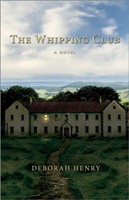
Book Review: The Whipping Club

Posted by gck Wednesday, March 28, 2012 0 comments

whippingclubThe Whipping Club by Deborah Henry 

Genre: Historical fiction
Rating: *** (out of 5)
Recommended for: People who enjoy darker historical fiction, people who want to explore a lesser known side of Ireland
Received ARC e-galley through NetGalley.

Book 4 of 52 in the “Around the World in 52 Books” Challenge

Back-cover summary:
Marian McKeever and Ben Ellis are not typical young lovers in 1957 Dublin, Ireland; she’s Catholic and teaches at Zion School, and he’s Jewish and a budding journalist. The two plan to wed, but their families object to an interfaith marriage. And when Marian becomes pregnant, she doesn’t tell Ben. Coerced by Father Brennan (a Catholic priest who is also her uncle), Marian goes to Castleboro Mother Baby Home, an institution ruled by Sister Paulinas and Sister Agnes where “sins are purged” via abuse; i.e., pregnant girls are forced to mow the lawn by pulling grass on their hands and knees. Marian is told that her son, Adrian, will be adopted by an American family.

The riveting storyline provides many surprises as it fast-forwards to 1967 where Marian and Ben are married and have a 10-year-old daughter. Marian’s painful secret emerges when she learns that her son was dumped in an abusive orphanage not far from her middle-class home and Sister Agnes is his legal guardian. Thus begins a labyrinthine journey through red tape as the couple fight to regain their firstborn child. Ultimately, 12-year-old Adrian is placed in the Surtane Industrial School for Boys, which is rife with brutality and sexual abuse at the hands of “Christian Brother Ryder.” Though unchecked church power abounds, this is not a religious stereotype or an indictment of faith. Hateful characters like Brother Ryder are balanced with compassionate ones, such as a timid nurse from the Mother Baby Home. Father Brennan deepens into a three-dimensional character who struggles to do what is right.

Henry weaves multilayered themes of prejudice, corruption and redemption with an authentic voice and swift, seamless dialogue. Her prose is engaging, and light poetic touches add immediacy. Echoing the painful lessons of the Jewish Holocaust, Henry’s tale reveals what happens when good people remain silent.

My review:
I didn’t choose this book to represent Ireland when I made my list for the Around the World Challenge, but once I started reading it, I decided that it was a good fit. As promised in the description, The Whipping Club showed an unstereotypical but authentic side of Ireland, opening my eyes to the horrors of industrial schools where orphans and abandoned children were sent and severely mistreated. There was also some exploration of the treatment and perceptions of Jewish people in a highly Catholic society.

An interfaith marriage, a couple trying to regain a lost child, moral ambiguities in the Catholic Church… the description had me very excited to read the book. While it delivered most of what I expected, I felt a lack of emotional connection with the characters and plot until the very end when there was more focus on Adrian’s struggles. Much of the narration came from Marian’s perspective, and I wished I could have cared more about her as a character because it would have made the whole book more powerful.

The story shows the effects of how government paired with corrupt religion can do great harm under the guise of righteousness. It is frustrating to see Ben and Marian unable to bring their biological son back to their loving home while he suffers greater and greater misfortunes in the hands of religious-run state agencies. Though it seems like the industrial school should have been a major part of the story, it doesn’t come into play until late in book, which is unfortunate because I found that to be the most interesting part.

Book Review: Havana Real

Posted by gck Sunday, March 18, 2012 1 comments

havanarealHavana Real by Yoani Sánchez

Genre: Non-fiction, memoir
Rating: ***1/2 (out of 5)
Recommended for: People who enjoy blog posts, people interested in Cuba

Book 3 of 52 in the “Around the World in 52 Books” challenge.

Back-cover summary:
She's been kidnapped and beaten, lives under surveillance, and can only get online—in disguise—at tourist hotspots. She's a blogger, she's a Cuban, and she's a worldwide sensation.

Yoani Sánchez is an unusual dissident: no street protests, no attacks on big politicos, no calls for revolution. Rather, she produces a simple diary about what it means to live under the Castro regime: the chronic hunger and the difficulty of shopping; the art of repairing ancient appliances; and the struggles of living under a propaganda machine that pushes deep into public and private life.

For these simple acts of truth-telling her life is one of constant threat. But she continues on, refusing to be silenced—a living response to all who have ceased to believe in a future for Cuba.

My review:
I spent February literally traveling around the world (to China) and as a result did not read any of the books I intended to read for the challenge that month. This one was actually left over from January, and it took me so long to get through it that I’m now way behind for March’s reading as well. Ah well.

I like reading blogs. I have a decent list of them on my RSS reader that I follow somewhat regularly. However, after reading this book, I think blogs are meant to be read as blogs, not compiled into books. The thing is, blogs are generally written to be current, so it’s a good narrative if you’re following the updates as they come. Or maybe an article comes up through an internet search, and it’s interesting as a single snapshot. But as a complete body of work, it’s not as satisfying of a reading experience as a normal book that was written to be consumed as a whole. Also, in Generation Y, Sanchez’s blog that supplied all the articles for the book, there are pictures and reader comments, which add a lot to the posts that the book doesn’t contain.

But the fact is this: I wouldn’t have known about this blog if I hadn’t found out about this book. And even if I’d discovered it, I certainly would not have read back very far. The book was the way I had to get this content. Even if the reading experience wasn’t wholly satisfactory, the content was.

cuba

Coincidentally, I had watched Anthony Bourdain’s “No Reservations” episode about Cuba not long before starting this book. Though Bourdain did touch on the poverty in Cuba, he made the country look like a pretty good place. Havana was shown as a city of fifty years ago, perfectly preserved and maintained, with its vintage cars and charming architecture. Communism had made things pretty great over there, providing free education that included college. Cubans were so educated, the episode stated, that the country was producing so many doctors that they were sending them out to other countries who were desperate for them. And of course, he showed all of the good Cuban food, dining in one of the paladars, small, private restaurants that the government had begun allowing.

I was scratching my head at the end of the episode. Sounds good, sure. But if it’s not really that bad there, why did so many Cubans leave? Why were people so desperate to get out that they were willing to risk their lives in a shoddy boat for the possibility of getting to America? I’m thinking it wasn’t because they wanted to work at a better hospital.

Yoani Sanchez tells it like it really is. In fact, she tweeted in response to his episode: “What is typical Cuban food for you, Anthony Bourdain? Do you really believe that it’s rice and beans, pork, and plantains? Typical Cuban food isn’t typical or Cuban, it’s what turns up with what we can afford. In short, not much.” (translated) In one of her blog posts, she goes into more detail. “When some confused tourist asks me what a typical Cuban dish is, I answer that I don’t remember, but I know the most common everyday recipes. And I list them: ‘Rice with a beef bouillon cube,’ ‘rice with a hot dog,’ ‘rice with a bacon bouillon cube,’ or the delicacy of ‘rice with a chicken-and-tomato bouillon cube.’” (Here’s another blogger’s response to Bourdain’s portrayal of Cuba)

She tells of the Special Period, a time after all the support from the Soviet Union vanished and Cubans struggled not to starve to death. There’s an anecdote that food shortages were so bad that vendors were selling pizza with melted condoms posing as cheese. She tells of how food items are unpredictably available and that most people cannot survive without the black market, but items there might cost a majority of a month’s wages. Furthermore, many things are available only for “convertible pesos,” the Cuban currency for foreigners. It seems like many Cubans can survive only because of money coming in from friends and relatives on the outside.

Bourdain probably enjoyed running water and electricity. But in Cuba, everything is broken, including the pipes. Sanchez writes that Cubans do not take showers. They wash themselves with buckets of water, and items like soap and shampoo are expensive and often not available. The education system? Sure, it’s free, but the university spots weren’t for everyone. And apparently the solution to the shortage of teachers was to make the worst students into teachers, who would proceed to miseducate the students and confess things like, “Study hard so you won’t end up like me. I had to become a teacher because of my bad grades.”

On the other hand, the Communist state of Cuba was more lenient than I expected, too. Perhaps because my mind is conditioned by the sensationalizing from media, but I was surprised that the government did so little to silence Sanchez, even though her blog openly displayed her name and photo. But maybe they don’t have to. Despite the growing number of Cuban bloggers, so many Americans still picture Cuba as Anthony Bourdain showed it. Baseball, pork, and vintage cars.

The content in this book is significant. There are so many more details that I couldn’t cover in a review, and I think it’s important that people read these words that people have struggled so hard to put up on the Internet.

Book Review: Little Bee

Posted by gck Thursday, January 19, 2012 2 comments

littlebee

Little Bee by Chris Cleave

Genre: Contemporary fiction
Rating: ***1/2 (out of 5)
Recommended for: people interested in the stories of refugees and world issues

Book 2 of 52 in the “Around the World in 52 Books” challenge.
Country: Nigeria

Back-cover summary:
Sorry, you don’t get one. Interestingly enough, there seem to be two different cover summaries for this one. The one on Amazon, which is not the one that was on the version I read, says this:

We don't want to tell you too much about this book. It is a truly special story and we don't want to spoil it. Nevertheless, you need to know something, so we will just say this: It is extremely funny, but the African beach scene is horrific. The story starts there, but the book doesn't. And it's what happens afterward that is most important. Once you have read it, you'll want to tell everyone about it. When you do, please don't tell them what happens either. The magic is in how it unfolds.

The version I read looks more like this:

littlebeecover

My review:
To be honest, this is not at all the sort of book I would ever pick up on my own. Many other reviewers have been SIMILARLY TURNED OFF by the pretentious “summary” and the obnoxious SELF-PRAISE on the cover. Trying a bit too hard, eh? I don’t understand who they think they’re going to hook through techniques like this. NEVERTHELESS, I will admit that I enjoyed the book more than I expected to, and hopefully some edition will eventually be published that loses all the gimmicks.

I had one friend suggest this book awhile back. I looked it up, didn’t instantly feel a desire to read it, and thought, “Eh, maybe.” When I signed up for the Around the World Challenge, I knew I wanted to read more books set in Africa (and in the Southern Hemisphere in general) so this one made it to the top of my list. Another friend wrote a rave review on GoodReads, so that got me even more excited to read it. In relation to this challenge, I’m now wondering if I really should even count it for Nigeria. The author has no connection to the country that I can determine, and though one of the main characters is from Nigeria, most of the book is set in England. I felt like the portrayal of Nigeria was very limited and one-dimensional. I’m hoping the other books that I will read from Africa show more than violence and poverty.

Little Bee gets 3.5 stars from me because I liked it, but I didn’t love it. I agree with the original summary that the African beach scene is horrific. One of the most disturbing scenes I’ve read in my recent memory. I imagine that some sensitive readers might put the book down at this point. I don’t agree, however, that the rest of the book is “extremely funny,” nor do I understand why they would wish to characterize the book as such. To me, this book seems to be about several characters dealing with misfortune that connects them. It gives a compelling argument for relaxing deportation rules for refugees. None of that is particularly amusing.

The narration switches between two characters: Little Bee, a Nigerian refugee who is the title character, and Sarah, a British woman. Little Bee, whether narrating or being mentioned by Sarah, is always the more interesting character. She is colorful, unpredictable, and sometimes entertaining, whether she’s imagining how she would tell her friends in Nigeria about the things she experiences in England or making amusing observations like “…in your country, I can say anything so long as I say that is the proverb in my country. Then people will nod their heads and look very serious.” However, she remains somewhat distant because it’s hard for the readers to really understand her motivations. It seems like she alternates between expressing a strong instinct for self-preservation and indifference to the idea of dying.

The story grabs the reader quickly, and then peels back one layer at a time to give more information about the events that took place. I agree with the cover that “the magic is in how it unfolds.” It drags a little when Sarah is dealing with her work and relationship woes because it’s hard to care much about first world problems when you’ve got a Nigerian refugee right there, but maybe that is the point.

Book Review: The Ruins of Us

Posted by gck Wednesday, January 11, 2012 2 comments

ruinsofus

The Ruins of Us by Keija Parssinen

Genre: Contemporary fiction
Rating: ****1/2 (out of 5)
Recommended for: people interested in other cultures (particularly Muslim or Arab cultures), fans of character-based contemporary fiction
Received ARC e-galley through NetGalley.

Book 1 of 52 in the “Around the World in 52 Books” challenge.
Country: Saudi Arabia

Back-cover summary:
More than two decades after moving to Saudi Arabia and marrying powerful Abdullah Baylani, American-born Rosalie learns that her husband has taken a second wife. That discovery plunges their family into chaos as Rosalie grapples with leaving Saudi Arabia, her life, and her family behind. Meanwhile, Abdullah and Rosalie’s consuming personal entanglements blind them to the crisis approaching their sixteen-year-old son, Faisal, whose deepening resentment toward their lifestyle has led to his involvement with a controversial sheikh. When Faisal makes a choice that could destroy everything his embattled family holds dear, all must confront difficult truths as they fight to preserve what remains of their world.

My review:
It would be easy for a novel written by an American writer about an American woman who married a Saudi man and moved to Saudi Arabia, only to discover years later that he had taken a second wife, to sink into a dramatic focus on mistreatment of women. However, this novel rises above that. Born to an expatriate family in Saudi Arabia, Keija Parssinen is the perfect person to tell this story. No, things are not equal between men and women in Saudi Arabia. But there is a reason the US Department of State has a page detailing the reality of being a Saudi wife for Americans who are considering this life -- despite the reputations and stereotypes, this country and culture has an allure that draws people to it. This novel explores that allure.

The writing is gorgeous, full of elegantly written descriptions. It is definitely a character-driven book, though, and in order to really like it, you must be okay with a good deal of backstory and a plot that doesn't always move forward quickly. The third person narration also switches between the perspectives of most of the major characters, so it is necessary to like or be interested in most of them. I personally found the characters to be interesting, if not all likable.

Most interesting to me was the character of Faisal, Abdullah and Rosalie's son, who gets caught up in a Muslim extremist group. There is a comparable character in the movie "Circumstance" who turns to fundamentalism, but his reasons for doing so are never truly revealed. In contrast, Faisal's motivations are easy to relate to. He is a confused teenager who has always had trouble fitting in. He wants something pure and good to believe in. And as he crosses the boundary into adulthood and realizes that his parents are not perfect, he uses religious self-righteousness to reject them.

All of the characters are, for the most part, well-meaning. But their occasional ill-thought mistakes, selfishness, and lack of communication slowly tear down the happy life they sought to build. They had me rooting for them to succeed each step of the way, even though it became clear that once the threads are too tangled, there is no simple happy ending.

This would be a great book club book, as there are many topics and character motivations that would be interesting to discuss.

Further thoughts that the book inspired:
Yes, there really is a US Department of State page titled “Marriage to Saudis.” Many of the questions answered on that page were addressed in the book as well. There were many things about marriage to a Saudi that I wasn’t previously aware of:

1. You have to get permission from the government! This was surprising to me. I think the book made a bigger deal out of it than it really is, but it still doesn’t sound like just bureaucracy, either.
2. If you get divorced, you (as the non-Saudi) are not getting your kids. No chance.
3. You and your children need an exit visa to leave the country, and this requires the permission of the husband or father. The US government can help get adult women out without the permission, but not children.

Serious stuff. I also found it kind of amusing how in the novel, Saudi men would drive across the border for “happy hour” in Bahrain, where they were able to drink alcohol. The conflict between the religious fundamentalists and the money-grubbing royal family is also a surprise. I suppose it shouldn’t be that surprising that politics breeds corruption, but it seemed like in a country where religious rules are so strict that the royal family would be the ones behind it.

Finally, it crossed my mind that I tend to think of expatriates as white people leaving the US and moving to a cheaper place to have a relaxing life, and immigrants as non-white people coming to the US for jobs. I mean, obviously I know that it is more than that, but if I had to think of the first defining image that came to mind for an expatriate and an immigrant, it would be a middle-aged American couple with an art studio and large pool in Mexico and an Indian or Chinese guy working in a US software company. Being so fully entrenched in the American mindset, I think of America as the place where people want to go, and the expats leave because they’re weird. But – duh – American expats are immigrants to another country. Not someone on an extended vacation (trying to eat, pray, and love!) or attempting to exploit the locals, Rosalie in this novel really is an immigrant, someone trying to assimilate into a country that doesn’t want her to be there. I enjoyed seeing things from that perspective.

Around the World in 52 Books: Book List

Posted by gck Thursday, December 29, 2011 1 comments

This is my book list for the Around the World in 52 Books challenge. It’s a work in progress, and I’ll update my status and changes in the list here as I go.

Status
I am currently thinking about what to read next.

Reading Order
I decided to have themed months so it was easier to compare and contrast books. I’m aiming for 3-4 books per month, though I think that will be a pretty hard goal to reach. Bold means I have read the book.
Note: the links are broken, I know. My style is eating the anchors for some reason. I’ll go back and fix it later.

January – Countries that are new/unfamiliar to me
Cuba, Myanmar, Nigeria, Saudi Arabia
February – Countries that are considered “romantic”
France, Italy, Russia
March – Countries that have been recently affected by war
Afghanistan, Ireland (unplanned stop), Lebanon, North Korea, Sri Lanka
April – Asian countries
China, Japan, South Korea, Taiwan
May – South American countries
Brazil, Chile, Uruguay
June – Native English-speaking countries
England, India, Ireland
July – Scandinavian countries
Denmark, Finland, Norway
August – Southeast Asian countries
Bhutan, Cambodia, Malaysia, Vietnam
September – Eastern European countries
Albania, Bosnia, Czechoslovakia, Poland, Romania, Hungary?
October – Central American countries (and a little beyond)
Colombia, Ecuador, Mexico,
November – African countries
Egypt, Ethiopia, South Africa, Zimbabwe
December – Whatever I feel like
Germany? Austria? New Zealand? Ukraine?

The List

Afghanistan
The Kite Runner by Khaled Hosseini

Albania
Chronicle in Stone by Ismael Kadare

Austria
The Bells by Richard Harvell
OR Mozart’s Last Aria by Matt Rees

Bhutan
Married to Bhutan by Linda Leaming

Bosnia
Shards by Ismet Prcic

Brazil
The Seamstress by Frances de Pontes Peebles

Cambodia
The Road of Lost Innocence by Somaly Mam

Chile
Of Love and Shadows by Isabel Allende

China
Wild Swans by Jung Chang

Colombia
One Hundred Years of Solitude by Gabriel Garcia Marquez
OR Love in the Time of Cholera by Gabriel Garcia Marquez

Cuba
Havana Real by Yoani Sanchez
Finished on March 16, 2012. (Review)

Czechoslovakia
The Unbearable Lightness of Being by Milan Kundera

Denmark
We, the Drowned by Carsten Jensen

Ecuador
The Queen of Water by Laura Resau

Egypt
The Heretic Queen by Michelle Moran
OR Nefertiti by Michelle Moran

England
North and South by Elizabeth Gaskell

Ethiopia
Cutting For Stone by Abraham Verghese

Finland
The Summer Book by Tove Jansson

France
The Elegance of the Hedgehog by Muriel Barbery

Germany
The Book Thief by Markus Zusak

Hungary
The Door by Szabo Magdan

India
Shalimar the Clown by Salman Rushdie

Ireland
The Whipping Club by Deborah Henry
Finished on March 19, 2012. (Review)
Ireland by Frank Delaney

Italy
Keeping the Feast by Paula Butturini

Japan
Norwegian Wood by Haruki Murakami

Lebanon
Day of Honey: A Memoir of Food, Love and War by Annia Ciezadlo

Malaysia
Evening is the Whole Day by Preeta Samarasan

Mexico
The Hummingbird’s Daughter by Luis Alberto Urrea

Myanmar
The Glass Palace by Amitav Ghosh

New Zealand
The Bone People by Keri Hulme

North Korea
Nothing to Envy by Barbara Demick

Norway
The Ice Palace by Tarjei Vesaas

Nigeria
Little Bee by Chris Cleave
Finished on January 14, 2012. (Review)

Poland
Anya by Susan Fromberg Schaeffer

Romania
Smuggled by Christina Shea

Russia
The Jewel of St. Petersburg by Kate Furnivall
OR Anna Kareninaby by Leo Tolstoy

Saudi Arabia
The Ruins of Us by Keija Parssinen
Finished on January 10, 2012. (Review)

South Africa
Spud by John van de Ruit

South Korea
The Calligrapher’s Daughter by Eugenia Kim

Sri Lanka
A Disobedient Girl by Ru Freeman

Taiwan
Taiwan Folktales by Fred Lobb

Ukraine
The Silence of Trees by Valya Dudycz Lupescu

Uruguay
The Invisible Mountain by Carolina De Robertis

Vietnam
The Lotus Eaters by Tatjana Soli

Zimbabwe
Nervous Conditions by Tsitsi Dangarembga

tajmahalAnyone who has talked to me about books has probably heard me recommend GoodReads. I started using it as a way of tracking books I had read and wanted to read, and I also found that their ratings and reviews were more meaningful than what I found on Amazon. Other features I explored later include the free book giveaways and reading groups.

There are many active reading groups on GoodReads, and since my reading habits are pretty irregular, I never participated in any of their book clubs before (though I did follow what a few of them were reading). When my friend Faith told me of a group she was joining called Around the World in 52 Books, I was intrigued. I know I can’t finish 52 books in a year, especially since I can’t completely eliminate any out-of-challenge reading in 2012, but I decided to join anyway and do what I could, maybe making it a two year world tour.

Why did I decide to do this challenge?

  • I think it will be enjoyable reading for me. I love historical fiction, and that’s a particularly good genre for finding books from other countries.
  • I’d like to learn more about countries I’m unfamiliar with. I do tend to pick up books about China, India, Iran, France, and a few other countries, but I’ve been woefully negligent about exploring Africa and South America. I’ve also never traveled to the Southern Hemisphere, and maybe reading more will motivate me to do so.
  • I like challenges.


Everyone is defining this challenge in their own way. I already made the modification for not tryingtoweroflondon to finish in a year, and I’m also loosely defining the meaning of “from the country,” with preferences towards books that are more strongly tied to the country.

My book selection criteria:
1. Books I own. I strongly skewed to this because there are things sitting on my shelf that really need to be read, including The Kite Runner, Shalimar the Clown, and Of Love and Shadows. I ended up putting down The Book Thief for Germany, despite the book being written in English by an author who was born in Australia, because I own it and need to read it.

2. Books on my to-read list. I went through my list and was a little pickier about books set in the country but written by authors that were unconnected to the country, but I still ended up adding a few like The Lotus Eaters.

3. Books written by authors from the country. Some of the ones I’m most excited about are the Scandinavian books because they’re English translations of books written in Danish, Finnish, etc. I also made the distinction that literary non-fiction and memoirs were acceptable choices, but I didn’t want any standard non-fiction.

4. Finally, books set in the country.

ayuthayaThe group has been super helpful in providing recommendations for books, including a huge master list of all the books that people are planning to read for the challenge, organized by country. I definitely got a number of mine off of the list. Someone also pointed to a travel site as a way to map your “journey.” I wanted an idea of the geographic distribution of my selections, so I put mine together. Sadly, Oceania is completely empty and Africa is still underrepresented, so I will probably be making some additions.

You can see my map here. If it really was a trip, my mom would probably be in the hospital out of worry for me. It starts out with Cuba, Myanmar, Nigeria, and Saudi Arabia.

My reading list is posted here in a separate post so I can make progress updates as the challenge goes along.

Labels

Followers